
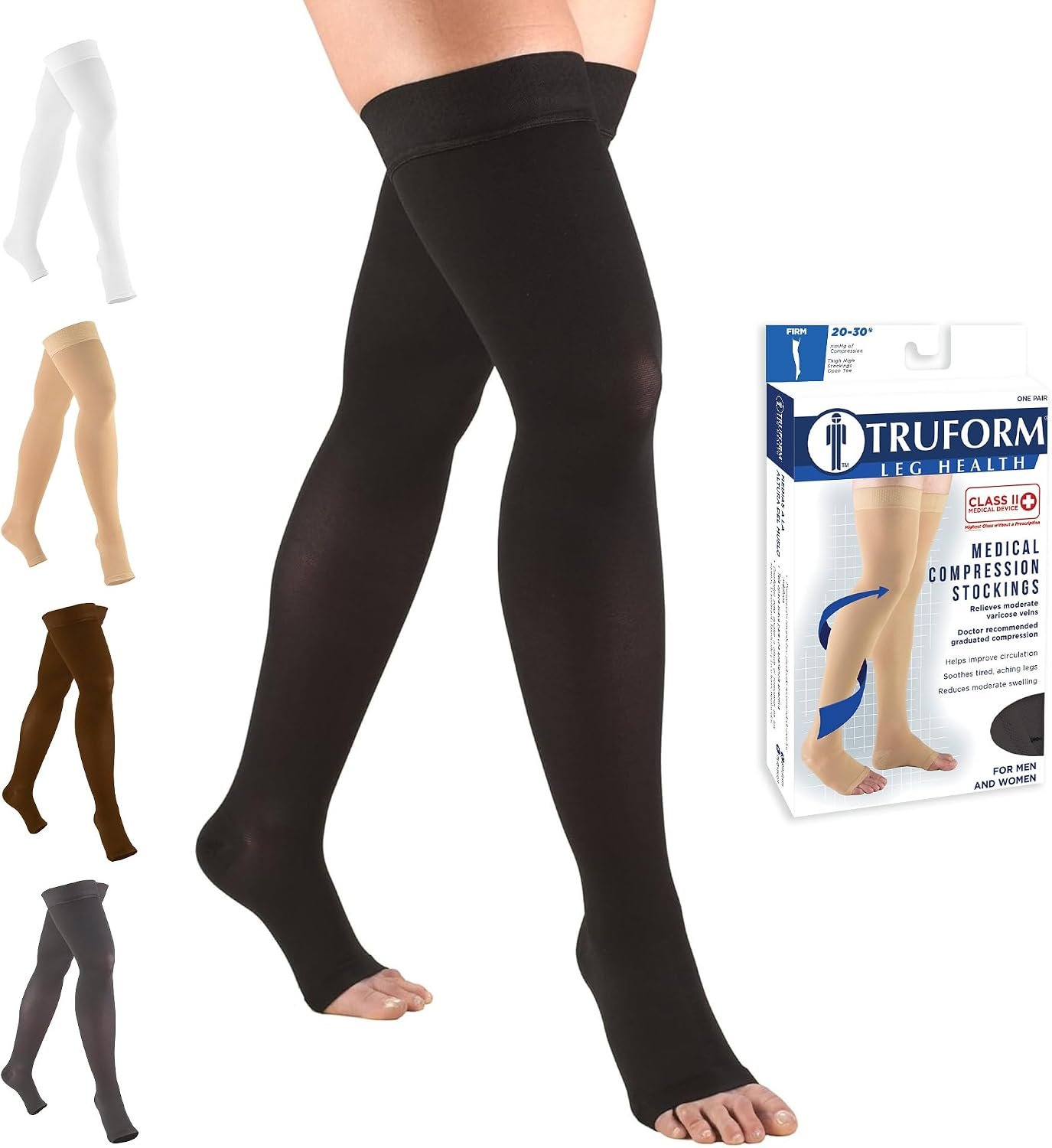
Truform 20-30 mmHg Compression Stockings for Men and Women, Thigh High Length, Dot-Top, Open Toe
$26.99
Related Products




Product description
Measure, size and fit for maximum theraputic value 
For best fit and feel ensure you know what compression level is right for you. The most common starting point for new users is 15-20 mmHg.
See this product in action on a live model
The video showcases the product in use.The video guides you through product setup.The video compares multiple products.The video shows the product being unpacked. Truform model 0810
Truform is made to move with you. It looks and feels like classic everyday legwear, yet delivers the highest level of medical-grade compression without a prescription.
What Compression Level is Right for You?
Add to Cart
Add to Cart
Add to Cart
Customer Reviews
4.2 out of 5 stars 1,863
4.1 out of 5 stars 4,304
4.0 out of 5 stars 14
3.9 out of 5 stars 171
Compression Rating
20-30 mmHg
15-20 mmHg (18 mmHg at ankle)
15-20 mmHg
30-40 mmHg
Pressure & Feel
Firm – More Tight on Leg
Moderate – Tighter at ankle
Moderate – Less Tight on Leg
Extra Firm – Most Tight on Leg
Strength Level
Extra Strength
Regular Strength
Regular Strength
Maximum Strength
Severity of Symptoms
Moderate
Post-Surgery (Blood Clot Risk)
Minor
Severe
Who Should Wear
Experienced Compression Users
Hospital Recovery
New & First Time Users
Users Directed by a Physician
Easy to apply, but different from regular socks  STEP 1
Pull sock inside-out to heel area. Stretch opening with thumbs. Slide over foot until toes reach end pocket. Center heel in the heel stitching.
 STEP 2
Begin turning right-side-out. Continue gradually pulling up the leg. For pantyhose: pull past thighs and over hips; adjust for comfort.
 STEP 3
Remove folds or wrinkles with a sweeping upward motion smoothing over leg. Fabric should be uniform. Do not fold or roll top band.
 STEP 4
Remove by turning “inside out”, gently pulling down to ankle. Insert finger, gently pull over ankle, heel and off the foot.
Everyday Medical-Grade
Your trusted partner in leg health for over 100 years
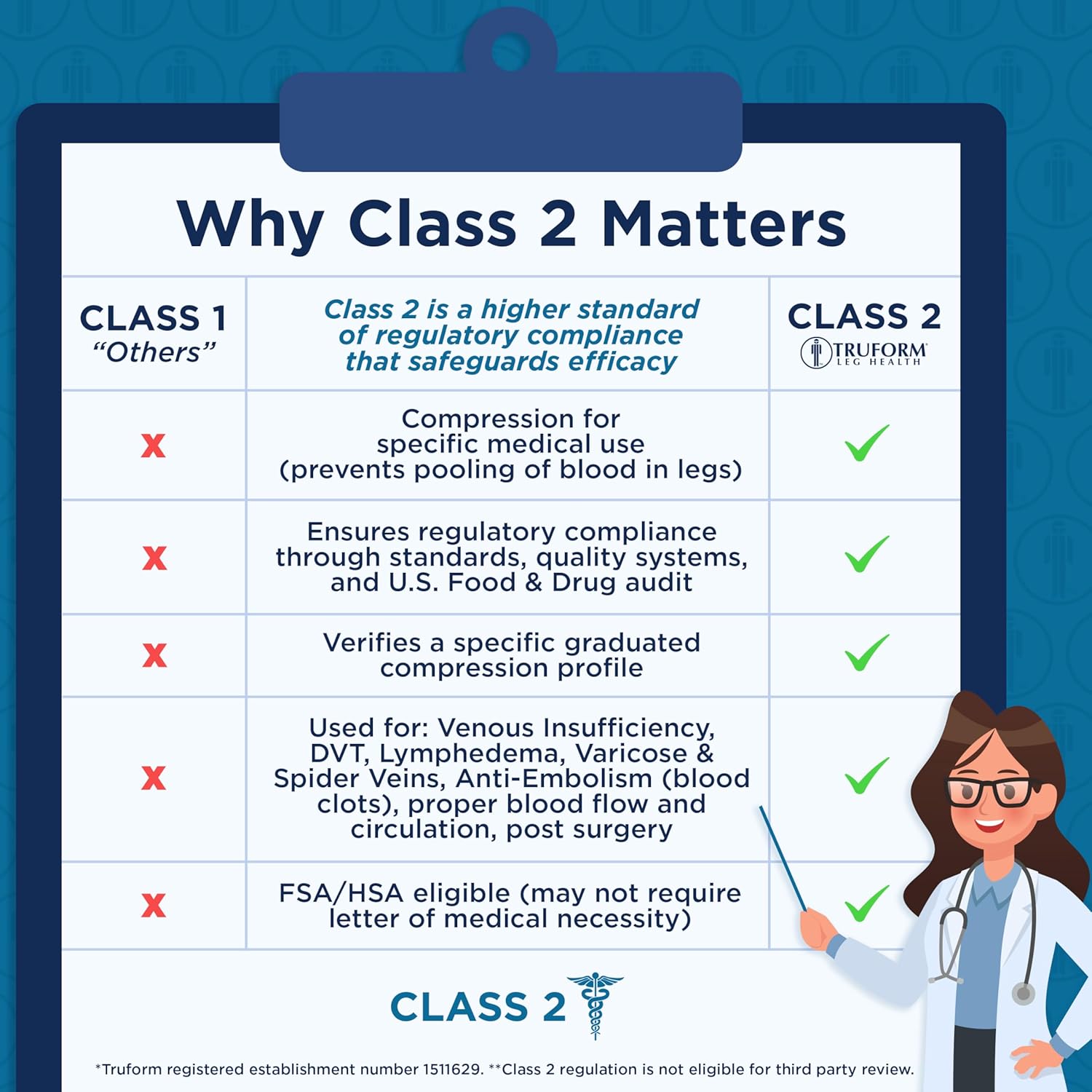
Only Class II registered medical compression has a verified graduated compression profile to prevent pooling of blood in legs and feet. Class II rating ensures regulatory compliance for specific medical use to help manage the underlying symptom associated with venous insufficiency and poor venous return. This includes lymphedema, anti-embolism (blood clots), leg swelling, heaviness, fatigue, varicose veins, spider veins, edema-related discomfort, and venous stasis-related skin changes.
The video showcases the product in use.The video guides you through product setup.The video compares multiple products.The video shows the product being unpacked. Truform medical compression
What makes Truform different from other compression brands?
Truform is part of SAI Brands, a family-run business in Cincinnati, Ohio since 1893. With 100+ years of medical manufacturing expertise, Truform maintains its own FDA-registered factory to ensure regulatory compliance for Class II medical devices.
What makes Truform Class II medical compression different from Class I general compression?
Class II has a verified compression profile for a specific medical use and is regulated by the FDA. Class I is for “general use” such as lifestyle-type shapewear and sports performance. Class II must register a UPC and/or UDI barcode with the FDA.
How do I know if compression garments are Class I or Class II?
Class II is a higher level of registration and device class which can be identified in the FDA’s GUDID database. Unique Device Identifier (UDI) barcode and lot code are required on all packaging. If the barcode contains letters it is not Class II.
How do I know what compression level is right for me?
If you are new to medical compression start with 15-20 mmHg. If you have no symptoms, are interested in preventative care, and or sit or stand for long periods of time then start with 8-15 mmHg. From there move up to higher levels as needed.
What does mmHg mean and how does it relate to graduated compression profiles?
mmHg is a measurement of pressure and stands for “millimeters of mercury” – the highest number is the tightest point of compression (at the ankle), from there pressure decreases to move blood up the leg. This gradient is called graduated compression.
Department : unisex-adult
Date First Available : February 2, 2016
ASIN : B0CR1LTJ37
Best Sellers Rank: #3,946 in Health & Household (See Top 100 in Health & Household) #1 in Medical Compression Stockings
Customer Reviews: 4.2 4.2 out of 5 stars (907) var dpAcrHasRegisteredArcLinkClickAction; P.when(‘A’, ‘ready’).execute(function(A) { if (dpAcrHasRegisteredArcLinkClickAction !== true) { dpAcrHasRegisteredArcLinkClickAction = true; A.declarative( ‘acrLink-click-metrics’, ‘click’, { “allowLinkDefault”: true }, function (event) { if (window.ue) { ue.count(“acrLinkClickCount”, (ue.count(“acrLinkClickCount”) || 0) + 1); } } ); } }); P.when(‘A’, ‘cf’).execute(function(A) { A.declarative(‘acrStarsLink-click-metrics’, ‘click’, { “allowLinkDefault” : true }, function(event){ if(window.ue) { ue.count(“acrStarsLinkWithPopoverClickCount”, (ue.count(“acrStarsLinkWithPopoverClickCount”) || 0) + 1); } }); });
$26.99